Blog
Why your next task isn’t always your most important task
2 min read
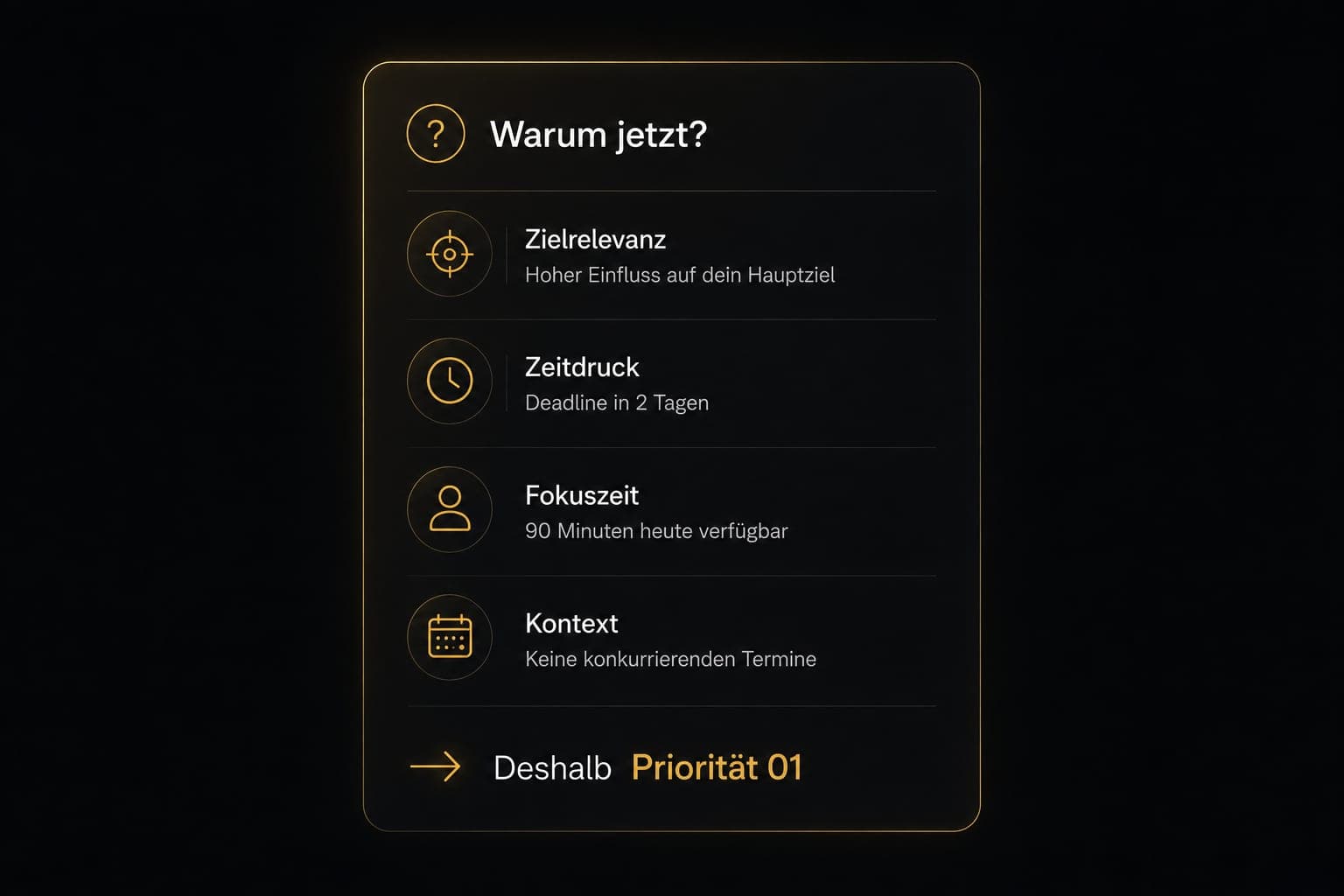
The next task on your list isn’t automatically the most important one — goal relevance, time pressure, and focus time decide.
That several things seem important at the same time is already a problem of its own — but even once that question is settled, another remains: What do I do right now, specifically? The answer isn’t automatically the top entry on the list.
The next task on the list isn’t automatically the right one
Most lists sort by creation date, by due date, or not at all. None of these criteria says anything about whether a task makes sense at the moment. A task can sit at the very top and still be wrong for the moment — for example because it needs more time than is currently available.
Three factors that determine the specific order
Goal relevance
Two tasks can seem equally urgent and still differ in importance, depending on which goal they serve. A task that directly advances an active goal carries more weight than one that is only loosely connected to it.
Time pressure
A deadline changes the order — but only if it’s real. An artificial deadline doesn’t deserve the same priority as one with actual consequences.
Available focus time
The most important task of the day is of little use if only twenty minutes are free between two appointments and the task needs ninety minutes of uninterrupted time. In that moment, a smaller task that fits is the more sensible next choice.
An example: two tasks, one answer
A slide deck for an important meeting needs to be revised — that would take about an hour and a half in one stretch. At the same time, a short reply to a colleague is waiting, which takes five minutes. Only twenty minutes remain until the next appointment. The slide deck is still the more important task — but the reply is the right next one right now, because it actually fits into the available time.
This trade-off — goal relevance, time pressure, and available time considered together — is exactly what Rise Beyond takes into account with every prioritization, instead of simply sorting tasks by due date. How that works in practice.
If you want to experience for yourself how this kind of prioritization feels in everyday life, you can apply for early access to Rise Beyond.
Organize less. Act with clarity.
Join the closed beta